

While in the midst of a global emergency, the current COVID-19 pandemic, nonprofits are challenged with how to successfully continue managing their mission-driven brand. Going the extra mile to prepare your organization for handling such a feat, will help you and your team better tackle any challenges that arise.
This is an opportunity to align your messaging with what your community needs and/or might be seeking during this time. A crisis is temporary and taking the time to show your nonprofit in a new light by providing specific messaging can instill a sense of trust and value that will be long lasting. It’s important to maintain vigilance in protecting your staff and being an example of a model citizen by not participating in unsafe behavior. Above all else, nonprofits must remain diligent of their brand and visible by its community to ensure they come out of this stronger than before. Here are few objectives for your nonprofit to keep in mind:
When it comes to collaboration in times of a crisis, you’ll have to get creative. These strategies shouldn’t complicate your current workflow but rather benefit your organization—having these tools in place will be very beneficial when a crisis is upon us. Taking your staff into consideration and how they’ll continue to operate is vital to prevent interruptions with current business tasks. For example, if your employees are required to work from home for any duration of time, what logistics and tools should you have in place to ensure everything runs smoothly? Tools such as, GoToMeeting and Slack allow your team to stay connected with one another while still being able to conduct important meetings and to ensure your mission continues to move forward. With the access to technology, it can make it easy to work from anywhere.
In times of a global emergency, having a plan in place to manage your organization, brand and team through the crisis is just as important as the ability to remain flexible and creative.

Here at UST, we understand the importance for nonprofit leaders to remain informed and prepared as the recent outbreak of the Coronavirus continues to impact the communities you serve. Nonprofit organizations nationwide have had to react quickly to a rapidly evolving crisis and change their standard business practices to maintain critical operations.
Like so many of you, we have transitioned to remote work and are continuously gathering resources to stay on top of the quickly evolving legislative developments designed to mitigate the economic fallout triggered by the public health response. We’ve also been in close contact with our strategic partners nationwide to ensure that the unique needs of nonprofit employers are being prioritized by our elected representatives during this time.
In an effort to help keep nonprofits abreast of evolving information, we’ve created a dedicated COVID Resources Webpage on our website, which we’ll continuously update, provides:
We’ll continuously be updating this page so please check back regularly and bookmark the page above for easy reference. UST has been supporting nonprofit employers for over 35 years and understand the value of being informed during times of uncertainty and challenge. Please know our thoughts are with all who have been impacted by the recent outbreak of COVID-19 and we’re here to answer any questions you may have.

With the rapid spread of the Coronavirus, also known as COVID-19, we have taken appropriate precautions here at UST to do our part of social distancing by working remotely as we know many of you have as well. Here in our local communities we see fear and panic everywhere—empty shelves at the grocery store, people standing in line for hours to get paper products, schools scrambling to move to a virtual method of teaching, large department stores closing their doors and citizens pushing for cities to lockdown.
New details pour in every day and our inboxes are flooded with shared information from our partners and members across the states. Yesterday, there was an article shared by our partner, ThinkHR, “When Business Threats are Contagious: 10 Answers for Employers Navigating the Coronavirus” that shares questions they have been receiving from HR professionals across the country. They range from how to handle employees refusing to come to work, creating a telecommuting policy and the appropriateness of asking about symptoms. The answers come from their certified HR advisors and is a benefit of our UST HR Workplace product. If you are an HR professional in a business still considering how to navigate these challenging times, you may find some answers here.
Q&A provided by ThinkHR, powering the UST HR Workplace for nonprofit HR teams. Have HR questions? Sign your nonprofit up for a free 30-day trial today.

Question: Is having different parental leave programs for women and men discriminatory?
Answer: Yes. Parental leave must be provided to similarly situated men and women on the same terms. For example, if an employer extends leave to new mothers beyond the period of disability from childbirth (for instance, to provide the mothers time to bond with and/or care for the baby), the employer cannot lawfully fail to provide an equivalent amount of leave to new fathers for the same purpose.
According to Title VII of the Civil Rights Act of 1964, an employer may not discriminate against an employee on the basis of pregnancy, childbirth, or related medical conditions; and women affected by pregnancy, childbirth, or related medical conditions must be treated the same as other persons not so affected but similar in their ability or inability to work. It is important to note that for purposes of determining these Title VII requirements, employers should carefully distinguish between leave related to any physical limitations imposed by pregnancy or childbirth and leave for purposes of bonding with a child and/or providing care for a child (parental leave). Leave related to pregnancy, childbirth, or related medical conditions can be limited to women affected by those conditions.
The Equal Employment Opportunity Commission (EEOC) provides the following examples of nondiscriminatory versus discriminatory leave policies as applied to men and women:
Q&A provided by ThinkHR, powering the UST HR Workplace for nonprofit HR teams. Have HR questions? Sign your nonprofit up for a free 30-day trial here.

Social media continues to prove to be an essential part of a nonprofit’s marketing strategy. A key benefit of social media is that it offers new forms of communication and the ability to engage with your organization’s stakeholders. Another benefit that can go unnoticed, but is a crucial and valuable resource is social media capital. Social media capital is a particular form of social capital that is accrued through an organization’s social media network. Nonprofits can look at social media capital as being an immediate outcome derived from their social media efforts, and as a resource that can be converted or used toward strategic organizational outcomes.
Social media capital is built around interests or causes rather than institutions, and this is where nonprofits have the upper hand over other types of organizations. Nonprofits have the opportunity to integrate their missions into their social media presence and strategy to take advantage of the capital that comes with advocacy and awareness efforts. Plus, any public events that relate to a nonprofit’s mission will likely be seen in the media and nonprofits can take advantage of this opportunity for exposure—building their online presence.
To dive deeper into social media capital, highlight its characteristics, and how nonprofits should be intentional when building out their strategy, here are five steps your nonprofit can take to get a better grasp on the benefits of social media capital:
1) Utilize resources and target audience strategy: In order to get your social media up and running you need resources—time, money, and staff. Unfortunately, these commitments are likely to be overlooked by nonprofit managers and passed off to another staff member to handle. Next, is your strategy—what is your organization’s communications role and what audience are you looking to target? The organization needs to develop a plan that shows a clear lay out of desired outcomes, defines the target audience, and communication efforts.
2) Strengthen connections and messaging on social media: To acquire social media capital, you need to utilize two essential tools; making connections and responding to messages in a timely manner. Connections are viewed as relationship building—these connections can be made through organization’s friending and/or following other users. This action shows your nonprofit’s interest in engaging with other users, in turn, creating an online community. Messaging is designed to provide content to your target audience and can be curated to meet the needs of the community you’re looking to reach and engage. And, can be done through any social channel (e.g., YouTube, Pinterest, Facebook, Twitter, Instagram).
3) Gain social media capital: This is the step where your organization should expect to see social media capital—these are the social resources in an organization’s social media network that can be used to achieve organizational outcomes. In order to attain any meaningful organizational outcome through social media activities, your organization must first obtain social media capital.
4) Turn your social media capital into organization resources: This is the step when you turn your followers into customers—converting social media capital into an organizational resource. For example, your organization asks followers to donate to a cause and it results into a success, this is social media capital converting into an organizational/social resource, i.e., financial capital.
5) Incorporate social media capital into your strategy: Nonprofits should look at social media capital the same way they look at financial capital. Financial capital is considered a convertible resource and needs both short-term and long-term planning. Similarly, social media capital is fluid and requires a thoughtful strategy to maximize its support of both short-term and long-term goals.
Social media capital is generated differently and more simply than capital accumulated offline. Social media capital is assembled on messages, connections, and having a trusted role in social networks where you want to start conversations. This can help convert capital into other resources or produce key organizational outcomes.

Terminating an employee is stressful for everyone involved and many managers and human resource professionals consider this responsibility the worst part of their job—whether as a layoff, a bad hire or for cause. With a little planning and preparation, you can make the experience less traumatic for everyone, maintain compliance with state and federal law, ensure your employee feels respected and avoid any bad publicity.
Organizations are under strict protocol when it comes to terminating employees and should therefore have written procedures in place to avoid negative repercussions such as fines and or lawsuits. Get ahead of issues as soon as possible by having open conversations on how to improve performance, attitude, or other matters so as not to blindside employees when the decision is made to let them go. Never take allegations as fact—conduct thorough investigations, secure findings and always document performance and behavioral issues as well as any disciplinary actions taken.
Following are some do’s and don’ts to consider when preparing to terminate an employee.
Tips on how to approach, conduct and communicate a termination:
Mistakes to avoid when terminating an employee:
Termination meetings are uncomfortable and come with risks but you can make the experience more palatable by preparing an effective and supportive approach to a hard conversation. The last 15 minutes you spend terminating an employee will likely be the most important of the employment relationship, so ensure you’ve covered your bases to avoid negative outcomes that could harm your organizations reputation.

For over three decades, UST has been providing nonprofits with workforce solutions that help manage unemployment funding, ensure compliance, and maximize employee bandwidth. By offering cost-effective services, reliable protection and significant savings, UST allows nonprofits nationwide to save valuable time and money.
As part of UST’s ongoing efforts to educate nonprofits we recently released our newest animated short video designed to provide a holistic overview of UST. About a minute long, this video reveals how nonprofit employers can streamline their day-to-day processes with simplified programs and dedicated support—including HR consultants, on-demand training modules, unemployment claims representatives, and career transition services.
UST already helps more than 2,200 participating nonprofits make the most of their resources to achieve their mission-driven initiatives. And, just last year, identified $2,707,750 in potential unemployment cost savings for 103 eligible nonprofit organizations. Watch the video today to discover how UST can benefit your nonprofit, your employees and the communities you serve.
For access to nonprofit specific how-to-guides, checklists and resources, sign up for UST’s monthly eNews today!

When marketing in the nonprofit sector, it can be a difficult road to navigate. With more than a million nonprofit organizations registered in the U.S., it can be challenging to earn the trust and support needed from donors to run a successful nonprofit. From grassroots groups to national organizations, local nonprofit marketing brings its own unique set of challenges. Even national nonprofits often struggle to implement cohesive campaigns across their many locations.
Here are five of the biggest obstacles nonprofit markers have to face on a daily basis:
1) Consistent Messaging: More often than not, nonprofits are faced with bandwidth restraints making it difficult to develop specific messaging that speaks to different marketing channels and constituents.
2) Communicating on a Personal Level: Since most nonprofits suffer from having a small team or budget restraints, marketers rely heavily on the success of email communications to their membership and supporters. While this form of communication can result in a positive response, it lacks personalization. The use of social media can be a great way to connect with your donors on a more personal level—allowing for more one-to-one communication.
3) Using Key Performance Indicators: Measuring success of marketing efforts is an area some nonprofit marketers lack expertise in or the time to devote to capturing this data. Marketing teams that have been able to incorporate the task of measuring their efforts, have more insight into performance and the ability to make data-driven decisions when creating an annual marketing plan.
4) Communication Across all Teams: In order for nonprofit marketers to gather accurate data and segment prospect lists, they have to collaborate with other departments and this can be a difficult task for some organizations. Passing information around the organization can lead to some restrictions or even tension amongst departments–competing for budget increases and donor attribution.
5) Dealing with Budget Restrictions: Nonprofit marketers deal with challenges from all directions, especially when it comes to budget restraints. Many nonprofits face challenges in reaching their marketing and engagement goals and this is primarily due to budgetary constraints. This is a consistent theme across most organizations, regardless of size or type of nonprofit.
With the needs of nonprofit communities constantly changing, we have to remember that the marketing strategies should change with them. To gain continual support, nonprofits need to keep consistent communication with donors, volunteers, and employees. They should attend council meetings, fundraisers, and other events to gain exposure and one-on-one face time with those they hope to serve.
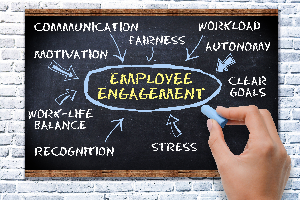
Question: Can you provide some tips for developing and conducting an employee engagement survey?
Answer: An employee engagement survey can be a great tool to check the temperature of your culture. When done right, the survey can help you understand the needs of your employees, which in turn benefits productivity, job satisfaction, and supports employee retention. It is also an excellent tool to help you calibrate the quality of your leadership as well as your employee relations and talent management programs.
Before you start, however, ensure that the management team is ready to act on the critical feedback you’ll get. Then decide what it is you need to know. Do you want to better understand how your employees view their relationship with management, understand and support the company’s strategic direction, or learn what aspects of their work environment, compensation and benefits, work assignments, and opportunities for learning and advancement are working (or not working)?
Next, determine how you will create, disseminate, tabulate, and communicate the survey process and results. If you’re creating your own survey, consider gathering employees from different areas of the company to formulate the survey questions and include them in the employee communications process to encourage participation. This team can also be instrumental in reviewing the survey results and providing feedback about how those results should be communicated and acted upon.
Another option is to use one of the many online engagement survey tools available in the marketplace. While the questions may not be as personalized to your company issues, you can get the surveys, along with the tabulated results, done quickly.
If you do create the survey in-house, consider these best practice tips:
Encourage participation by using incentives or contests. With more feedback, you’ll have a better picture of your employees’ engagement level. Train your leaders so that they are prepared to use the survey feedback as a gift to improve performance and have productive feedback and performance improvement planning sessions.
Most importantly, don’t ask for employee feedback unless you are willing to do something with the results. Your employees will expect you to implement changes and take action. Let them know how much you value and respect them by listening and acting on their opinions and ideas.
Q&A provided by ThinkHR, powering the UST HR Workplace for nonprofit HR teams. Have HR questions? Sign your nonprofit up for a free 30-day trial here.

It’s that time of year again when we can expect to experience some inclement weather conditions across the states. When severe weather interferes with the day-to-day operations of your nonprofit, having a plan in place for unexpected barriers to your workflow can help to keep your organization productive and or reestablish business operations sooner than later if you are forced to shut down.
Severe weather increases the risk of power outages—knocking out heat, power and communication services—and often for extended periods. Many employers find themselves dealing with a number of weather related inconveniences they hadn’t even considered until it happens to them. While there are no federal or state laws that define how a company should handle such things as notifying employees of office closures or how to handle pay for missed workdays, that doesn’t mean it shouldn’t be a priority.
By taking a proactive approach now, you can avoid the headache later—scrambling to figure out what to do and where even to begin. You can start by creating a plan that includes policies for what to do before, during and after emergencies—ensuring that everyone in the organization has a role and understanding of the policies once finalized.
Below are some tips to help ensure your nonprofit and its employees are prepared:
Regardless of what weather incident you may experience, having a solid preparedness plan in place will help ensure your employees know what to expect and aid in keeping everyone informed. There are dozens of websites dedicated to helping businesses create successful preparedness plans so just remember—a little preparation now will go a long way should your nonprofit come face-to-face with Mother Nature.