

After an extremely challenging year (or two) of workforce disruptions, nonprofit employers are finding their footing again. And, with the holidays upon us and more organizations supporting flexible routines—working remote, adopting a hybrid model, or still meeting in-person—many are looking for creative ways to celebrate the holidays with their devoted staff. It’s these events and get-togethers that bind employees together and makes them feel valued while also improving overall morale.
Opportunities to recognize employee achievements and strengthen team connections should never be overlooked but especially not during this time of year. Whether you realize it or not, your employees miss their colleagues and the fun activities they use to do together such as holiday celebrations—even if they prefer working from home. A sense of community among your remote or hybrid team is crucial for building a positive employee experience and maintaining your nonprofit brand.
All of the activities below are designed to accommodate teams regardless of their work location or time zone. You can even run some of these activities over the course of a few days (or weeks) ensuring all participants have time to respond. And, with a little research you can find a plethora of helpful templates, checklists, and directions online to assist with coordinating a fun-filled event.
Get creative and take the time to celebrate your team this year by spreading a little extra holiday cheer! By planning something fun and engaging for your team, you can renew loyalty, get employees excited about the new year ahead, and nurture company culture.

Whether you’re aspiring to be an executive leader, get promoted into a director’s position, or even launch your own nonprofit—rarely there are clearly defined paths to career development when working in the nonprofit sector. While this lack of structure can be challenging, it offers an unexpected opportunity to pave or create your own career path. Without the typical career ladder to climb, the opportunity to take on new responsibilities could be presented to you in a more timely fashion. At any age, with drive, desire and expertise being essential characteristics, you can become a nonprofit leader who wants to make a difference.
In order to create the right professional development plan, here are nine methods to follow, to consider, and use as a guide when furthering ones’ professional career as a nonprofit leader:
1) Conduct thorough interviews: Find those who hold a position that you might aspire to want one day. Take the opportunity to ask questions about how they got to where they are, what their day-to-day tasks look like, how they contribute to the organization, and what the position requires of them.
2) Seek out volunteer opportunities: When it comes to learning, especially within the nonprofit sector, there’s no substitute for hands-on experience. Volunteering can offer exposure to the operational facets of the organization by taking on new responsibilities, such as, join the fundraising or strategic planning committee or volunteer to help with the organization’s next event.
3) Ongoing education: If you’re looking for an advantage when pursuing leadership opportunities, consider looking into continuing education (i.e.: an advanced degree, or a specific leadership training program). Having this additional training under your belt will set you apart being well versed in business management principles and the ability to juggle competing priorities.
4) Learn about your organization: Take the time to develop a well-rounded view of everything that is involved in the role of running a nonprofit. This experience will be valuable to you as you progress into a leadership position.
5) Apply constructive feedback: As you take on new challenges and work outside your comfort zone, it’s more than likely you’ll make mistakes along the way. Take the time to learn from these and plan how you will do better in the future.
6) Network amongst your peers: Find people who are at a similar point in their own careers and develop genuine relationships with them. Be sure that you add real value to the relationship and that way, your peers will come to value you—opening doors for you in the future.
7) Relocate to another organization: With a strong foundation of skills in place and a desire to take on more responsibility, you might find that your current organization doesn’t have any openings for you to move up to. Take this opportunity to look for other employment and if you find a great position within your network, don’t hesitate to pursue it.
8) Join a nonprofit board: Being part of a board will give you high-level insights about the inner workings of nonprofits. Develop relationships with others who serve on nonprofit boards and seek out an organization doing work/serving a community that you’re passionate about.
9) Find day-to-day challenges: Leaders face challenges daily, so it is crucial to avoid becoming complacent. Striving to challenge yourself on a daily basis will not only push you to find solutions, it will help you build your resume.
When applying these methods, you will develop the skills and knowledge necessary to successfully lead an organization. If you envision yourself in a leadership role, you’ll have the ability to lay the foundation by excelling in the position you currently hold. These methods will help you cultivate leadership skills, emphasize teamwork and inclusive decision-making.

One of the main reasons employees leave their jobs is because they don’t feel appreciated—causing many to question their work and often looking for a job elsewhere. Not surprisingly, but now more than ever before employees expect their workplace to deliver a productive, engaging, and enjoyable experience so to keep high performing employees on the payroll, leaders must consider recognition efforts a top priority. Celebrating achievements at work is also an important part of the productivity cycle and can transform the organization by keeping everyone aligned to the mission and values that contribute to its long-term success.
Impactful recognition has little to do with money and doesn’t need to be extravagant to be effective—it should however be genuine and come from a place of appreciation. It’s important that leaders celebrate wins big and small as both are equally valuable and impactful. Often missed opportunities to celebrate an employee include successful completion of large or new projects, teamwork, work anniversaries, and ongoing behavior that positively impacts fellow co-workers. When a manager takes the time to regularly demonstrate gratitude and appreciation for an employee’s accomplishments—both professional and personal—it can motive, engage, and reinforce positive behaviors and outcomes.
Remind your employees that you value their contributions and celebrate their successes. Check out UST’s “5 Ways to Celebrate Your Team” for some creative ways you can start recognizing your team.
It’s up to leaders to find opportunities to celebrate their employees while also encouraging employees to celebrate each other. By creating a culture of recognition, you can improve morale and ensure your most valuable assets remain motivated to stay.

Question: What are some typical examples of employee discipline? Are there any you recommend?
Answer: Discipline should reflect the severity of the behavior, attempt to correct it, and be applied consistently. You’ll want to consider how you addressed certain behaviors in the past and the precedent you want to set for the future. For instance, if you jump straight to a final warning when a certain employee is an hour late to work, but let another employee come in late regularly without so much as a written warning, you’re setting yourself up for trouble.
We generally recommend progressive discipline. This means you start small and work your way up to termination. Progressive discipline often includes these steps:
At each step, make your expectations clear, notify the employee of the consequences if they fail to improve (that they’ll be one step closer to termination), and document what actions you took. The warnings you give to the employee should stick to the facts, i.e., what infraction was observed, when it occurred, and what policy or policies were violated. Opinions about the infraction should be left out, as these are easily disputed. For example, “Yesterday, you arrived 20 minutes late in violation of our attendance policy” simply states the facts, whereas “You’re always tardy and can’t be trusted to arrive on time” is likely to get pushback.
Q&A provided by Mineral, powering the UST HR Workplace for nonprofit HR teams. Have HR questions? Sign your nonprofit up for a free 60-day trial here. As a UST member, simply log into your Mineral portal to access live HR certified consultants, 300+ on-demand training courses, an extensive compliance library, and more.

A strong leadership team is vital to the success of any nonprofit organization—without it you risk reduced productivity, delayed decisions, and low morale. Rooted in the ability of a nonprofit to maintain sustainability, having a leadership succession plan in place is vital to organizational success.
Don’t miss your chance to download a free copy of UST’s latest Employer Guide, 3 Vital Steps for Developing a Durable Nonprofit Leadership Team, to discover strategies that can help identify (and develop) tomorrow’s leaders with training opportunities designed to strengthen your brand and build resilient teams. In this eBook, you’ll discover:
The consequences of insufficient leadership can be devastating to an organization. Safeguard your nonprofit and its mission by reinventing your organizational leadership strategy—minimizing the threat (and high cost) of turnover.

Flexible work arrangements have been around for decades but now that we’re beginning to see the new era of work take shape it’s more important than ever to support and manage remote teams in a way that allows them to work effectively from home—ensuring sustainability of day-to-day operations. Managing employees without daily face-to-face interaction has its own unique set of challenges but when leaders focus their skills on the right set of best practices employees—and organizations—can excel.
Being proficient at managing remote employees requires strong communication skills, reachability, positive reinforcement, flexibility, and empathy. Productivity is no longer based on “desk time” and visible activity, managers must now gauge success based on outcomes and revise how they lead their people while finding new ways to keep them engaged.
Implement these best practice tips to improve morale, productivity, and engagement.
There are many ways to develop better relationships with a remote team that include transparent communication, open doors, and clear expectations to name a few. Micromanaging employees has never been a favorable practice and can cause undue stress for employees—leaving them to feel like they’re not trusted to do their work. While these best practice tips require time, attention, and consistency, they can help to develop healthy habits that allow your team to maintain productivity and achieve goals.

As employers continue to strategize for the future—paving the way for flexible work models and creative retention tactics—many are seeing permanent change take place. UST surveyed more than 400 nonprofit leaders from across the U.S. to uncover the latest sector trends caused by the pandemic and created the 2021 Workforce Trends Infographic.
Download your free copy today to get a sneak peak at what your nonprofit peers had to share about their top workforce issues, COVID’s impact on staffing levels and more.
For only $99, you can also download a copy of the complete 2021 Nonprofit Sector Report to uncover valuable insight on how nonprofits continue to navigate the ongoing challenges that have risen throughout the pandemic.

Question: Generally, our employees are “always on,” meaning they check work emails and communicate with co-workers/supervisors via smartphone during all hours. However, some of our employees are beginning to feel overwhelmed. Any suggestions?
Answer: Although employers may see the “always on” employee as highly productive, the constant state of being readily available can leave employees feeling overwhelmed and exhausted. To combat this struggle, employers may:
Note: The application of any new or existing workplace policy must be applied consistently and without discrimination throughout the workforce.
Q&A provided by Mineral, powering the UST HR Workplace for nonprofit HR teams. Have HR questions? Sign your nonprofit up for a free 60-day trial here. As a UST member, simply log into your Mineral portal to access live HR certified consultants, 300+ on-demand training courses, an extensive compliance library, and more.
Hiring new employees can be time-consuming, costly, and stressful. Pre-employment assessments can be useful in determining whether or not a potential new hire is a good fit candidate—with the right skills and mind set for your organization. A proven, scientific way to screen candidates and mitigate the risks of hiring mistakes, incorporating pre-employment testing can be the most effective way to gain a more thorough picture of a candidate’s strengths, skills and personality.
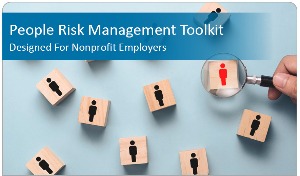
As we know, people-related risks within an nonprofit organization can range from bad hires and misconduct to harassment and lack of diversity in the workplace. To help nonprofit employers strengthen their employee risk management practices—and mitigate the risks that can ultimately affect your bottom line—we created the 2021 People Risk Management Toolkit.
This toolkit includes a performance improvement plan, a risk audit questionnaire, risk management best practice tips and more:
Take the time to thoroughly vet your candidates before hiring. The cost of pre-employment screening is minimal compared to the cost of hiring someone who doesn’t stay. Not to mention, that an employee who isn’t a good fit—for the job or your workforce—can also impact the entire team and overall morale.
If you’re looking for access to more HR-specific articles, templates and checklists? Sign up for a FREE 60-Day Trial of UST HR Workplace today! You’ll also gain access to live HR certified consultants, 300+ on-demand training courses and an extensive compliance library.

Nonprofit employers nationwide are living through a fundamental transformation in the way they work and the pace at which employee priorities are changing. In the latest rendition of UST Live, we were joined by leaders from across the U.S with expertise in nonprofit management to discuss innovative strategies for creating a forward-looking workplace culture that is flexible, inclusive, and resilient.
Watch now to discover:
Upcoming UST Live Webinars: UST Live was designed to equip nonprofit leaders with strategies that can help sustain their workforce and their mission-driven initiatives. In our final session of the year—scheduled for early December—we’ll discuss nonprofit leadership and succession planning.